

Founders often underestimate how critical a clean, accurate cap table is. Here are the top six mistakes that can derail fundraising, ownership clarity, and long-term growth—and how to avoid them.
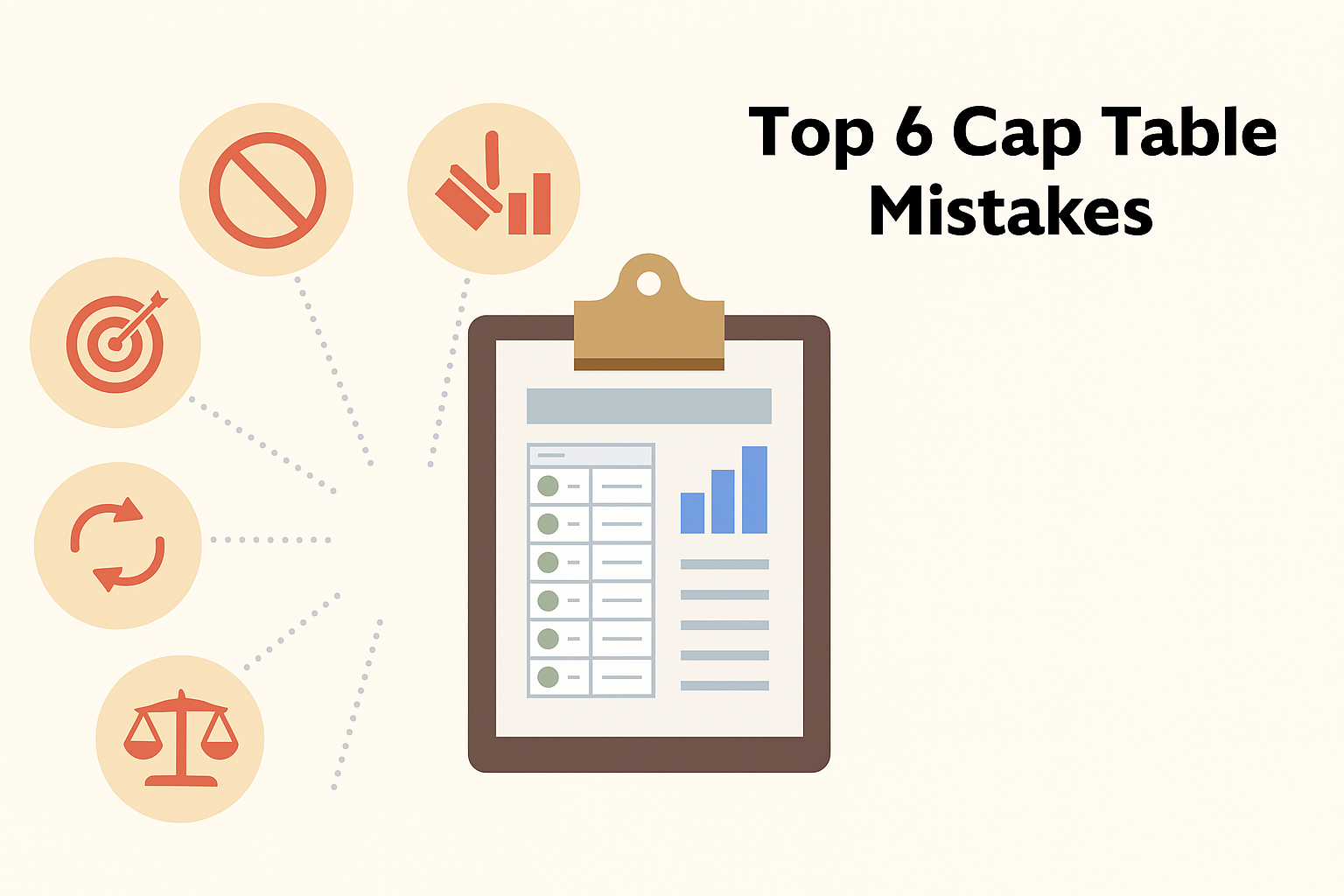
🚫 1. Not Creating a Cap Table Early
Many founders wait until investors demand one, but this delay creates confusion and mistrust. Without a cap table from day one, ownership disputes are inevitable.
👉 Fix: Start your cap table as soon as you incorporate. Document founder shares, early promises of equity, and any initial investments.
🧹 2. Letting the Cap Table Get Messy
A cap table isn’t a “set it and forget it” document. Outdated records can derail deals, delay funding rounds, and cause legal headaches.
👉 Fix: Update it every time ownership changes—new hires, option grants, investor buy-ins, or founder departures.
📊 3. Relying Only on Spreadsheets
Excel works for the garage stage, but as you add investors, employees, and instruments like SAFEs, manual spreadsheets become error-prone and risky.
👉 Fix: Transition to cap table management software early. It automates updates, tracks dilution, and reduces costly mistakes.
🎯 4. Misallocating Shares or Option Grants
Improperly documented equity pools or missing option grants demotivate employees and spook investors. Worse, they can lead to expensive legal disputes.
👉 Fix: Clearly define founder equity, employee option pools, and investor shares. Ensure grants are properly authorized and recorded.
🔄 5. Ignoring Convertible Instruments
SAFEs and convertible notes eventually convert into equity. Failing to track them means founders are blindsided by dilution later.
👉 Fix: Record all convertible instruments in your cap table, even before they convert, so you understand future ownership impact.
⚖️ 6. Overlooking Share Classes and Preferences
Not all shares are equal. Preferred shares may carry voting rights, liquidation preferences, or dividends. Failing to document these details creates disputes during exits or acquisitions.
👉 Fix: Track share classes carefully. Make sure your cap table reflects rights, preferences, and obligations tied to each class.
✨ Final Thoughts
A cap table is more than a spreadsheet—it’s the single source of truth for your company’s ownership. Investors, employees, and co-founders rely on it to understand control and value. By avoiding these six mistakes, founders can build trust, streamline fundraising, and protect their long-term equity.